
In the modern global luxury industry, Louis Vuitton (LV) is undoubtedly a phenomenal entity. According to long-term tracking data from major international brand valuation agencies (such as Interbrand and BrandZ), Louis Vuitton’s brand value consistently ranks at the pinnacle of the luxury sector, with an influence spanning leather goods, ready-to-wear, timepieces, fine jewelry, and digital fashion.
While many believe LV’s success relies purely on the halo of fashion, a scientific exploration from the perspectives of business management, semiotics, and consumer psychology reveals that its rise is the product of a century of rigorous strategic execution. This article will deeply deconstruct the four core underlying logics that have driven Louis Vuitton to become a top-tier global luxury brand.
1. Historical Narrative and Craftsmanship Premium: Building an Impassable Brand Moat via Time
The primary difference between a luxury product and a standard consumer commodity lies in the former’s unreplicable historical assets. LV has flawlessly woven “The Art of Travel” and “Ultimate Craftsmanship” into its core DNA.
1.1 Aligning with Generational Shifts: The Strategic Positioning of “The Art of Travel”
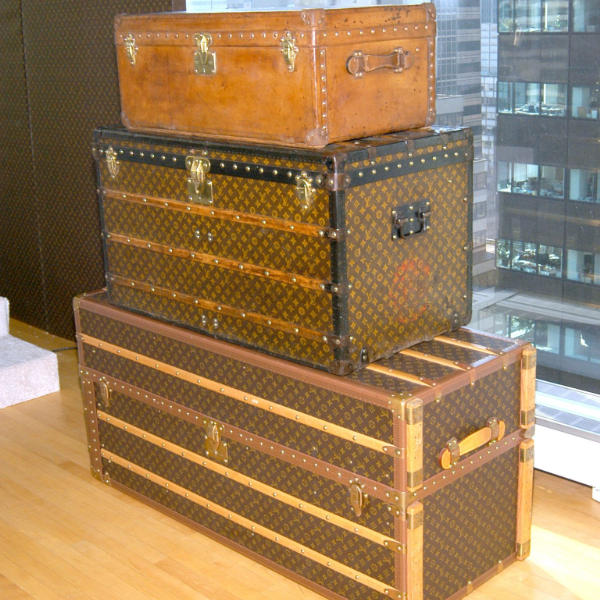
In 1854, the founder, Mr. Louis Vuitton, established his eponymous brand in Paris. This coincided with the golden era of the European Industrial Revolution, marked by the rapid rise of steam locomotives and massive steamships. The way high society traveled was undergoing a revolutionary disruption. Mr. Louis Vuitton astutely identified the pain point of traditional dome-shaped trunks, which were highly inconvenient to stack, and innovated the flat-topped, gray waterproof canvas trunk (Gris Trianon). This invention solved a transport challenge triggered by modern transit and tethered the LV brand to the elite’s modern lifestyle of “premium travel,” securing its initial accumulation of high-end brand equity.
1.2 Patented Material Engineering and the Legacy of Anti-Counterfeiting
In the luxury industry, durability serves as the material foundation for a brand premium. LV’s core leather goods (such as the Speedy and Neverfull) heavily utilize a proprietary material known as Monogram Canvas. Although the base layer consists of woven cotton canvas, the surface undergoes a highly sophisticated, specialized coating treatment that grants it exceptional scratch resistance, water resistance, durability, and flame retardancy unmatched by natural leather. This high-tech, utilitarian physical property, paired with the Monogram visual emblem introduced in 1896—which combined Japanese floral aesthetics with family initials—established an incredibly high cognitive barrier, lowering recognition friction and anti-counterfeiting verification thresholds for consumers worldwide.
2. Semiotic Matrices and Consumer Psychology: Converting Products into Universal Social Status Identifiers
According to semiotic theory, luxury consumption represents the consumption of symbols rather than mere material utility. LV manages its visual emblems with textbook precision.
2.1 The Veblen Effect and Psychological Defenses of High-Recognition Symbols
In economics, luxury goods conform to the classic Veblen Effect, where demand increases as the price rises. Purchasers seek not only the functional utility of a product but also the psychological gratification and identity tags it conveys. LV understands this perfectly, shaping its classic Monogram and Damier ebene/azur canvas patterns into universal social status identifiers. Because these designs offer exceptional visibility and low recognition resistance in social settings, consumers instantly broadcast their financial strength and aesthetic social status by carrying an LV product. This efficient conversion of social capital serves as the underlying psychological driver of its enduring sales volume.
2.2 The Asset Value Mythos of “Monogram + Timeless Classics”
From an asset pricing perspective, LV’s classic bags consistently maintain exceptionally high residual value retention rates in the secondary luxury market (frequently reaching 60% to 85% or higher), with certain limited editions even appreciating over time. Through a global price adjustment mechanism enacted periodically at the end of each year (only increasing, never decreasing), LV has successfully implanted the perception that “purchasing LV equates to rational asset appreciation.” This business logic scientifically mitigates the psychological guilt of consumers facing high price points, transforming “luxury spending” into a “long-term investment behavior.”
3. Dynamic Scarcity and the Pyramid Business Matrix: LVMH Group’s Top-Tier Traffic Control Strategy
As the primary engine of the LVMH Group—the world’s largest luxury conglomerate—LV displays ultimate rationality and dominance in supply chain management and retail channel control.
3.1 The Absolute Closed Loop of “No Discounts, No Outlets”
To preserve the Dynamic Scarcity vital to a luxury brand‘s survival, Louis Vuitton remains one of the very few brands globally to enforce a 100% direct-to-consumer (DTC) model. It never participates in public discount promotions or clearance sales, nor does it operate any factory outlets. Whether in physical flagship boutiques or on its official website, its pricing framework remains rock-solid. This extreme control over distribution completely eliminates the risk of brand dilution via downmarket wholesaling, ensuring that every consumer experiences an absolute sense of premium value regardless of when they purchase.
3.2 Precision Harvesting via a Pyramid Product Matrix
From a commercial monetization standpoint, LV has structured a highly scientific, pyramid-shaped product matrix:
The Pinnacle: Comprises bespoke hard trunks, exotic leather handbags, and high jewelry. These items feature low production volumes and astronomical pricing, serving exclusively to preserve the brand’s ultra-luxury positioning.
The Foundation: Comprises small leather goods, perfumes, entry-level Monogram canvas bags, and accessories. This tier leverages a lower financial barrier to entry, precisely capturing and harvesting the expansive middle class and younger generations (the “aspirational buyers”), contributing massive, stable cash flow and exceptional profit margins to the brand.
4. Avant-Garde Cross-Pollination and Pop Culture Fusion: Injecting Eternal Youth into Heritage Luxury
If a centennial brand blindly adheres to convention, it will eventually be forgotten by changing times. While upholding its core heritage, LV has consistently proven to be the most daring brand in executing disruptive, cross-industry breakthrough strategies.
4.1 Transforming Trends via Artistic Collaborations
At the dawn of the 21st century, when the luxury industry remained relatively conservative, LV boldly launched deep cross-disciplinary collaborations with contemporary artists. From Stephen Sprouse’s graffiti collection to Takashi Murakami’s vibrant multicolored Monogram, and Yayoi Kusama’s hypnotic polka dots, each partnership remixed the brand’s classic symbols with youth culture. This strategy, rather than diminishing the brand’s prestige, injected a continuous stream of avant-garde vitality into LV through artistic subversion.
4.2 The Strategic Pivot Toward High-Street Luxury
In 2017, Louis Vuitton’s historic collaboration with the cult street-fashion brand Supreme shattered the boundary dividing traditional Haute Couture from modern streetwear. Subsequently, the brand appointed visionaries deeply embedded in street culture—such as the late Virgil Abloh and multi-hyphenate music icon Pharrell Williams—as creative directors for menswear. This series of bold talent and product design choices represents a highly rational Consumer Generational Shift Strategy. It seamlessly transferred the immense purchasing power of the global hip-hop, skate, and digital social media demographics onto the historic French leather goods house.
Conclusion
Louis Vuitton’s reign at the apex of the global luxury sector is by no means accidental. At its material foundation, it possesses impeccable proprietary canvas craftsmanship and a deep historical travel narrative. On a socio-psychological level, it leverages a highly recognizable semiotic matrix that satisfies Veblenian desires for identity validation. Operationally, its no-discount, pure-DTC scarcity loop and pyramid matrix maximize profitability. Finally, amid evolving cultural tides, it achieves self-adaptive regeneration by fusing with disruptive contemporary art trends. This absolute unification of emotional aesthetics and rational commercial engineering unveils the scientific reality behind Louis Vuitton‘s unrivaled global influence.